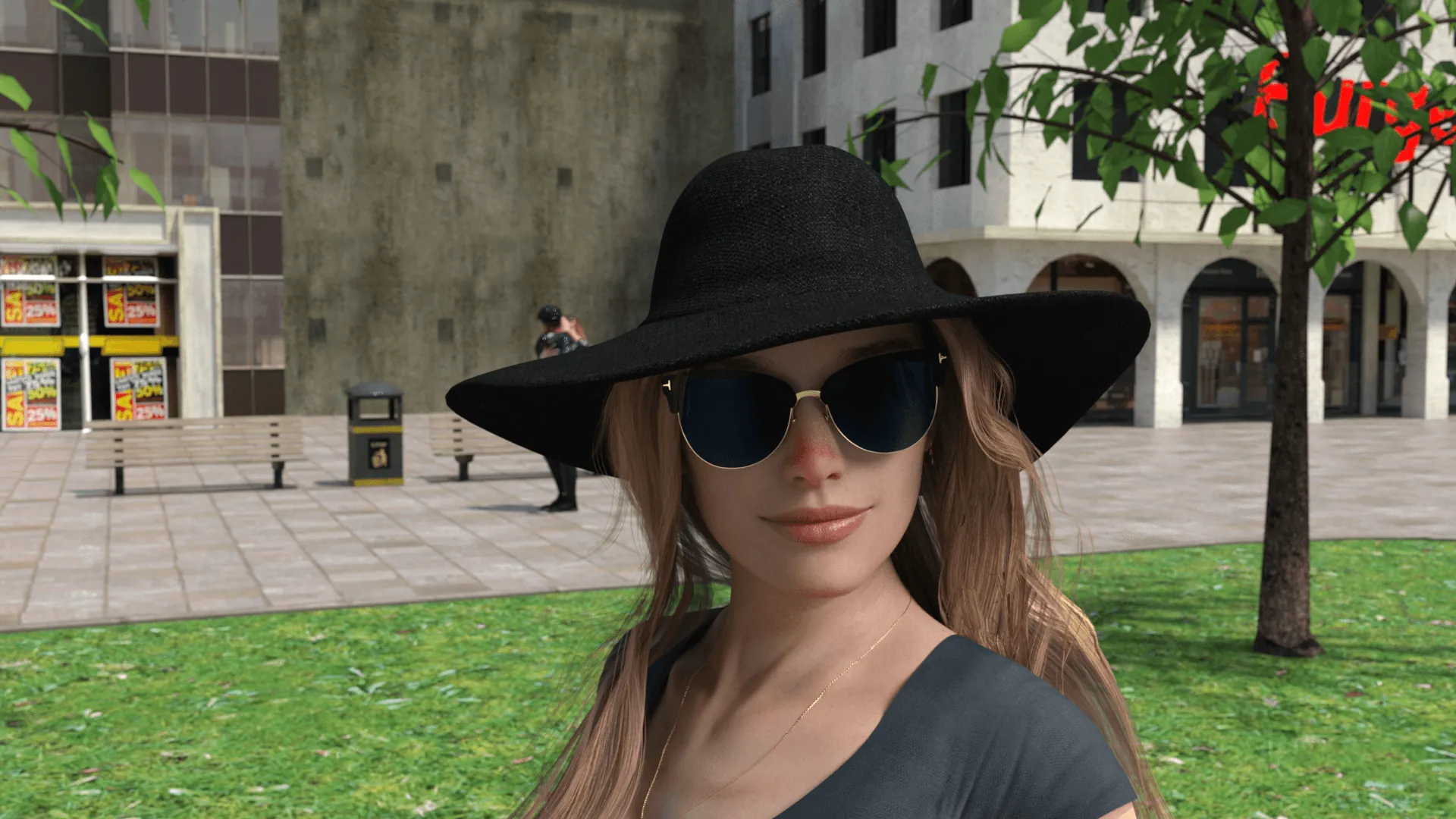
Aperture
Play Aperture
Aperture Screenshots











Aperture review
Explore the immersive visual novel experience with puzzle mechanics, character relationships, and branching narratives
Aperture stands out as a unique interactive experience that seamlessly blends narrative-driven storytelling with engaging gameplay mechanics. Set within the prestigious Hoshino Academy, this visual novel immerses players in a gripping mystery filled with complex character relationships, meaningful choices, and emotional depth. Whether you’re drawn to the intricate puzzle-solving elements, the branching storylines, or the character customization options, Aperture delivers a multifaceted gaming experience that rewards exploration and replayability. This comprehensive guide walks you through everything you need to know about Aperture, from its core mechanics to its emotional narrative layers, helping you fully appreciate what makes this interactive experience so compelling.
Understanding Aperture’s Core Gameplay Mechanics
Ever felt that glorious “aha!” moment when a video game puzzle finally clicks? 🧠 That satisfying snap of understanding where all the weird pieces fall into place? For me, that feeling is the entire reason I play games. I remember the first time I booted up Aperture, expecting a neat story and maybe some light brain-teasers. What I got instead was a full-on, glorious workout for my spatial reasoning—a game that didn’t just tell a story but made me physically think my way through it. If you’re ready to bend the rules of reality and have your perception challenged, you’re in the right place. Let’s dive into the brilliant Aperture gameplay mechanics that make this more than just another portal creation puzzle game.
This chapter is your toolbox. We’re going to break down the four core systems that define the interactive puzzle solving experience in Aperture. By the end, you’ll not only understand how to play, you’ll understand how to think within its world. Trust me, once these concepts click, navigating its beautiful, brain-bending environments becomes a language you’ll dream in. 🌌
How Portal Creation and Spatial Puzzles Work
At the absolute heart of Aperture’s identity is, unsurprisingly, the Aperture Science Handheld Portal Device. But let’s move past the fancy name. In practice, this tool is your paintbrush, and every flat, white surface is your canvas. The core Aperture gameplay mechanics revolve around one deceptively simple action: placing two connected portals.
Here’s the basic law: you fire a blue portal onto one wall, and an orange portal onto another. Step through blue, you exit orange. Step through orange, you exit blue. It sounds straightforward, but this is where Aperture transforms from a simple tool into a spatial problem-solving game masterpiece. The genius isn’t in the portal itself; it’s in how you use this new connection to redefine the very architecture of a room.
Think of a classic early puzzle. You’re in a chamber with a giant gap. The exit door is high up on a far wall, utterly unreachable. A flat surface is above you on the ceiling, and another is on the wall behind you. The solution? Fire a portal onto the ceiling above you, and another onto the wall behind the exit door. You jump into the ceiling portal and suddenly fall out of the wall portal, now positioned perfectly to walk through the exit. You haven’t moved the room; you’ve moved the pathway through it.
This is the essence of the portal creation puzzle game challenge. You are constantly scanning for those viable, pale surfaces—they are your stepping stones, your ladders, your secret passages. The game expertly teaches you to stop seeing walls, floors, and ceilings as barriers, and start seeing them as potential doorways. My personal “mind-blown” moment came when I realized I could use a portal on the floor and a portal on a wall to create an infinite falling loop, building up tremendous speed for a kinetic solution (but we’ll get to that next!). 🔄
The learning curve is perfectly paced. It starts by teaching you to see connections in two dimensions, then gradually introduces the third. You’ll soon be creating cascading sequences of portals, where exiting one immediately sends you through another, effectively creating a teleportation chain across vast, otherwise impassable spaces. Mastering this visual remapping of your environment is the first and most critical skill in your interactive puzzle solving arsenal.
Mastering Momentum Conservation and Object Interaction
Okay, you’ve got portals down. You can connect Point A to Point B. Now, let’s make things move. This is where Aperture’s physics engine sings and where the momentum conservation mechanics become your best friend or your most hilarious downfall.
The rule is beautifully consistent: momentum is preserved through portal travel. If you fall from a great height into a portal on the floor, you will shoot out of the linked portal on a wall at the same speed. This isn’t just a cool trick; it’s a fundamental Aperture gameplay mechanic for solving entire classes of puzzles. Need to launch yourself across a cavern? Build a vertical drop, place your exit portal aimed at the far ledge, and take a leap of faith. The game’s spatial problem-solving game elements evolve from “how do I get there?” to “how do I build up enough speed to get there?”
But it’s not just about you. This principle applies to every object in the game, and that’s where object interaction becomes key. The iconic Weighted Storage Cube isn’t just a doorstop; it’s a projectile, a counterweight, and a key. Need to hit a button high on a wall? Place a portal below the button and another portal high up on a wall elsewhere. Drop the cube into the high portal, and it will rocket out toward the button.
The interactive puzzle solving here involves thinking kinetically. You learn to create Rube Goldberg-esque chains of cause and effect. I once spent twenty minutes on a chamber that required using a laser beam, a redirecting cube, and my own falling body, all passing through different portals at specific angles, to trigger three separate switches in sequence. The moment it all synced up was pure magic. ✨
This combination of momentum conservation mechanics and object manipulation is what separates Aperture from simpler puzzlers. You’re not just linking spaces; you’re manipulating the energy within them. It forces you to think about trajectories, angles, and velocity. It turns the environment into a giant physics playground where every surface and every cube is a potential component of your solution.
Environmental Analysis and Problem-Solving Strategies
By now, you have the tools: portals for pathways and physics for propulsion. But knowing when and where to apply them is the true art. This is where environmental analysis gameplay transitions you from a button-pusher to a strategic thinker. Before you fire a single portal, you need to become a detective.
Entering a new test chamber in Aperture is a ritual. I always stop and just look. 🕵️♀️ I scan for:
* The Objective: Where’s the exit? Is it locked? What switch, button, or receptacle needs to be activated?
* Key Resources: How many Weighted Cubes are there? Are there Turrets, Energy Balls, or Lasers? Are there movable platforms or bridges?
* Portal-Ready Surfaces: Where are the usable white panels? Critically, what is their spatial relationship to the objective and the resources?
This environmental analysis gameplay is the silent, crucial phase of every puzzle. It’s about building a mental map of possibilities. For example, seeing a cube on a high ledge and a button across a pit tells you that you likely need to move the cube through space to the button. The white panels become your planned route. Maybe you portal the cube directly, or maybe you portal yourself to the cube first.
The best advice I can give is this: think in reverse. Start at the goal and work your way back to your starting position. What is the final action needed to open the door? What needs to happen right before that? Deconstructing the puzzle from the end point often reveals the necessary portal placements and object interactions much more clearly than starting from the beginning.
This strategic layer is what makes the Aperture gameplay mechanics so deeply satisfying. You’re not just reacting to obstacles; you’re conducting a symphony of space, physics, and logic. Your agency as the silent protagonist comes entirely from this planning and execution. The story of your progress is written not in dialogue choices, but in the elegant, player-designed sequence of events that leads to each chamber’s exit.
To summarize these interconnected systems, here’s a quick-reference table that breaks down how each core Aperture gameplay mechanic functions:
| Core Mechanic | Player Action | Primary Purpose in Puzzle-Solving |
|---|---|---|
| Portal Creation | Placing two linked portals on flat, white surfaces. | Redefines spatial paths, creating new routes for the player and objects. |
| Momentum Conservation | Moving or falling through portals while maintaining velocity. | Generates kinetic energy to reach distant areas or trigger switches at a distance. |
| Object Interaction | Picking up, placing, and manipulating cubes, balls, and other elements. | Provides keys, weights, triggers, and projectile components for complex puzzles. |
| Environmental Analysis | Observing chamber layout, resources, and surface placements before acting. | Forms the strategic plan, connecting tools (portals, momentum) to the goal. |
Now, how does Aperture scale this brilliant foundation? Through its ingenious Aperture difficulty modes. 🎚️ Starting on the standard path gives you a perfectly crafted learning curve. But for those who crave more—and trust me, you will—the advanced modes are where the game truly opens up.
These Aperture difficulty modes don’t just make puzzles harder by adding more steps. They introduce new layers. You might find chambers with limited portal surfaces, forcing ultra-efficient planning. Other modes introduce “hardcore” physics where a single misstep with momentum conservation mechanics can be catastrophic, or require you to solve puzzles with a limited number of total portal shots. This radically changes your environmental analysis gameplay, demanding perfection in your initial assessment.
Most compellingly, mastering these higher Aperture difficulty modes often unlocks alternate solutions and secret paths that reveal exclusive narrative content. It’s the game’s way of rewarding deep mastery of its interactive puzzle solving systems. The story isn’t just hidden in audio logs or text; it’s hidden behind your own growing skill as a spatial thinker, waiting to be discovered by those who can see all the possibilities within a room.
Ultimately, the Aperture gameplay mechanics form a seamless loop: Analyze the environment, plan your portal network, harness momentum, and interact with objects to execute your vision. This loop is the core of the portal creation puzzle game experience. It’s a language of space and energy that, once learned, allows you to converse with the game’s world on its own terms, unlocking not just doors, but the deeper mysteries waiting behind them. Your journey through Aperture isn’t just about reaching the end—it’s about the beautiful, brain-bending process of becoming the kind of thinker who can. 🚀
Aperture represents a masterclass in blending interactive storytelling with engaging gameplay mechanics, creating an experience that resonates with players seeking depth and meaningful engagement. From its innovative portal-based puzzle systems to its emotionally complex narrative driven by meaningful choices, the game delivers on multiple fronts. The extensive replayability features, including branching storylines, challenge modes, and hidden content, ensure that each playthrough feels fresh and rewarding. Combined with its cinematic presentation, atmospheric sound design, and dynamic environments, Aperture creates a cohesive world that draws players in and keeps them invested. Whether you’re drawn to the intellectual challenge of puzzle-solving, the emotional weight of character relationships, or the satisfaction of uncovering hidden story details, Aperture offers something compelling. If you’re looking for an interactive experience that respects player agency while delivering a gripping mystery set in a richly detailed world, Aperture deserves your attention. Dive into Hoshino Academy and discover why this visual novel stands out as a memorable and engaging interactive experience.