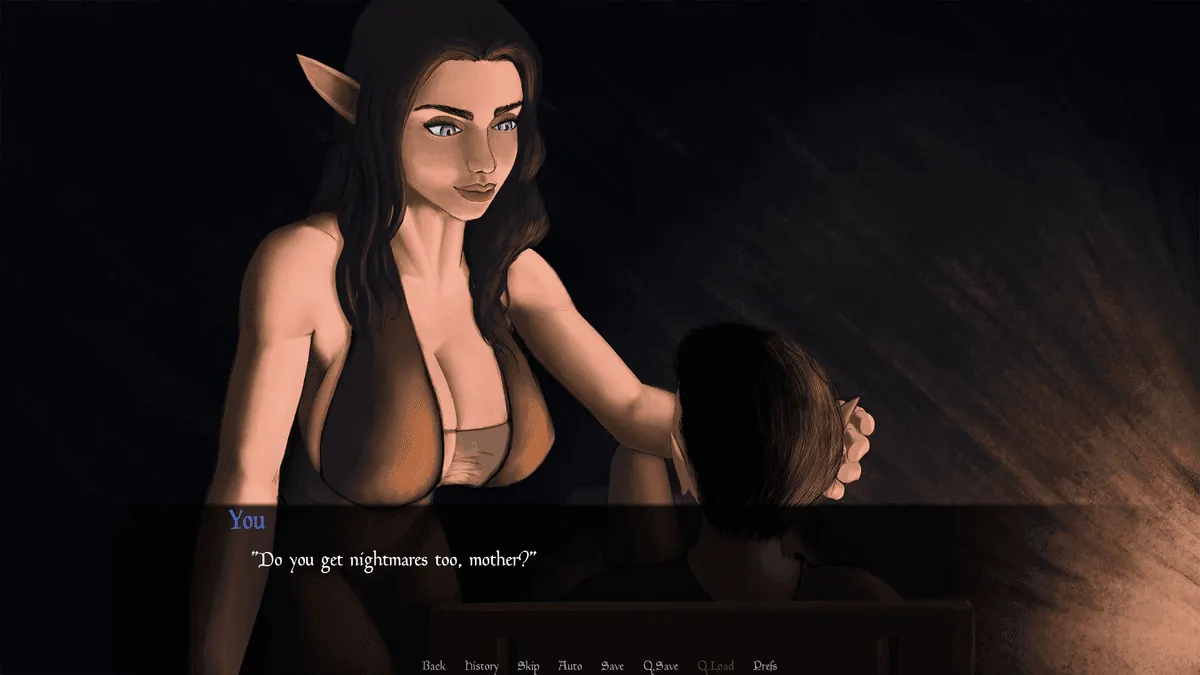
Apocalust
Play Apocalust
Apocalust Screenshots
















Apocalust review
Discover the supernatural powers, steamy romances, and moral choices in this captivating game
Imagine snapping photos one day, only to stumble upon an ancient relic that flips your world upside down, granting you wild metaphysical powers fueled by raw desire. That’s the hook of Apocalust, the gripping adult visual novel where you play a young photographer torn between your normal life and a path of temptation. Developed by psychodelusional, this Ren’Py game (version 0.09) dives deep into branching stories, intimate relationships, and tough moral decisions that ripple through your small town. I’ve sunk hours into it, balancing virtue and vice, and let me tell you—every choice feels electric. Ready to explore Apocalust gameplay, characters like Naomi and Taylor, and those game-changing paths? Let’s jump in and uncover why this title stands out in adult gaming.
What Makes Apocalust Gameplay So Addictive?
I still remember the first time my character touched the relic. 🪨 The screen trembled, a low hum filled my headphones, and for a moment, I wasn’t just clicking dialogue options—I felt that strange energy crackle. My ordinary, somewhat mundane digital life was instantly hijacked by this thrilling, corrupting potential. That moment perfectly captures the heart of Apocalust gameplay: the electrifying duality of living a normal life while holding supernatural keys to reshape it. One minute you’re choosing what to say at a coffee shop, the next you’re subtly bending reality to your will. This isn’t just a visual novel; it’s a power fantasy wrapped in a deeply personal story, and it’s this core loop that makes it so incredibly hard to put down.
The genius of the Apocalust gameplay loop is how it blends the familiar with the fantastical. You explore beautifully rendered locations, engage in conversations, and make seemingly small Apocalust choices. But layered on top of this is your growing arsenal of metaphysical powers Apocalust grants you. These aren’t just for flashy cutscenes; they’re tools integrated into daily scenarios. Need a private moment? A minor temporal nudge might cause a distraction. Want to learn a secret? A touch of empathic projection could lower someone’s guard. The game constantly presents you with a fascinating question: solve this problem the human way, or use your otherworldly advantage? Every decision feeds into the larger narrative machinery of how Apocalust branching works.
How Do Metaphysical Powers Shape Your Choices?
Your metaphysical powers Apocalust introduces are far from simple parlor tricks. They are the primary lens through which you interact with the world and, more importantly, with people. Think of them less as combat spells and more as social and environmental cheat codes—but every cheat has a cost. 🧠
For instance, early on, I found myself cornered by a pair of suspicious characters in a rain-slicked alley. The “normal” Apocalust gameplay options were to try to talk my way out or run. But I had been investing in a particular power that allowed for environmental suggestion. I used it on a loose fire escape above them. The creaking groan and sudden clang of metal made them flinch, creating the perfect opening to slip away. It felt less like winning a fight and more like orchestrating a chaotic moment, a direct result of my earlier Apocalust player decisions to develop that specific ability.
These powers directly enable new branches in dialogue and action. A conversation tree might have a standard empathetic option, a pragmatic one, and a third, shimmering option unlocked only if you possess a certain level of “Spectral Insight.” Choosing that power-fueled option doesn’t just progress the conversation; it sets a story flag that can unlock entirely new scenes or relationship thresholds hours later. This is the “web model” of how Apocalust branching works—your choices aren’t just left or right, but are threads you pull that vibrate across the entire narrative web, changing its shape in ways you might not see immediately.
Exploring Branching Paths: Integrity vs Desire
This all culminates in the game’s central thematic crossroads: the Apocalust paths integrity desire. From the moment you gain your powers, the game starts tracking a subtle, internal metric. Are you using these gifts to help, to understand, and to connect, even at a personal cost? Or are you embracing them for personal gain, domination, and gratification?
The Path of Integrity is about restraint and connection. It means resisting the easy, power-fueled solution in favor of genuine human effort. It leads to deeper, more stable relationships and unravels the mysteries of the relic in a way that prioritizes understanding over control. The Path of Desire is about indulgence and power. It’s about saying “yes” to every temptation, using your metaphysical powers Apocalust provides to take what you want. This path unlocks intense, often chaotic encounters and a raw, intoxicating sense of freedom, but it often leads to isolation and a corruption of your original self.
Here’s a breakdown of how these Apocalust paths integrity desire manifest:
| Path | Core Focus | Key Consequences |
|---|---|---|
| Path of Integrity | Resistance, empathy, truth-seeking. Using powers sparingly and ethically. | Stronger, more trusting bonds with key characters. Access to “pure” story resolutions and hidden lore. Higher challenge in some scenarios. |
| Path of Desire | Indulgence, personal power, manipulation. Embracing the full scope of your abilities. | Volatile, passion-driven relationships. Access to exclusive, power-centric scenes and endings. Potential for narrative chaos and isolation. |
My first playthrough was a desperate scramble down the Path of Desire—I was like a kid in a candy store with my new abilities! But on my second, focusing on Integrity, I was shocked at how many quieter, sweeter moments I had missed. Entire character arcs were different. This duality is what defines the Apocalust gameplay experience and its massive replay value.
Tips for Mastering Player Interactions and Combat-Like Decisions
So, how do you navigate this dense, reactive world? Here’s some practical advice born from many, many hours of experimentation (and more than a few doomed save files). 💡
Save Often, and in Multiple Slots! This is the golden rule. How Apocalust branching works means a single choice in Chapter 2 can close off an entire avenue in Chapter 5. Having a save file before major decisions or power upgrades lets you explore consequences without commitment.
- Experiment with Alignment: Don’t feel you must be purely “good” or “evil.” Sometimes, a pragmatic Apocalust choices in a tense situation can be more effective than a purely empathetic one. The game responds to nuance.
- Track Affinity Visually: Pay close attention to character reactions—the subtle shifts in expression, the tone of their voice, and the specific language they use after your Apocalust player decisions. The game excellently signals shifts in relationship thresholds without obvious meters.
- Power Synergy is Key: Your metaphysical powers Apocalust lets you develop often work best in combination. A power that clouds memory might set up a perfect scenario for a separate power that implants a suggestion. Think creatively!
- Embrace the Gallery: The game’s scene gallery isn’t just a reward; it’s a map. Unlocked scenes show you the branches you’ve found, hinting at the paths you haven’t. It’s the best tool for planning your next replay to see how different Apocalust gameplay styles unfold.
This brings us to the true magic of Apocalust. The immersion doesn’t just come from the gorgeous art or the great writing—it comes from the tangible weight of your Apocalust choices. You feel the narrative bend and shift under the pressure of your will. The Apocalust paths integrity desire aren’t just moral labels; they are emotional journeys that reflect back at you what you value. It’s a game that makes you wonder, “What would I really do with that kind of power?” and then gives you a breathtaking, complex world in which to find the answer. 🎭
Apocalust Gameplay FAQ
Q: What happens if I consistently choose selfish or cruel options? Does it lock me out of content?
A: Not at all! While it will certainly steer you firmly down the Path of Desire and alter your relationships, it unlocks its own unique content, scenes, and endings. The game is designed to reward commitment to a path, not punish you for it. You might miss some intimate, trusting moments, but you’ll gain intense, power-driven ones instead.
Q: Is there a “point of no return” between the Integrity and Desire paths?
A: The game is remarkably fluid, but major narrative junctions will solidify your alignment. Your early and mid-game **Apocalust player decisions** set a strong direction, but key moments before the final act will often present a definitive choice that locks in your primary path for the ending sequence.
Q: How should I manage my save files for the best experience?
A: Create a new save slot at the start of each major chapter or after a significant story event. Most importantly, save before experimenting with a major new power or a high-stakes dialogue choice. This lets you freely explore the fascinating cause-and-effect of **how Apocalust branching works** without losing progress.
There you have it—Apocalust masterfully blends supernatural thrills, steamy romances, and choices that truly matter, pulling you into a double life of temptation and consequence. From wielding metaphysical powers as a budding photographer to romancing sharp Naomi or clumsy Taylor, every playthrough reveals new layers of this small-town saga. My own journeys through integrity and desire paths left me hooked, rethinking morality in gaming. Whether you’re chasing virtuous bonds or corrupt power, this visual novel delivers. Dive into Apocalust today, experiment with those branching stories, and share your wildest outcomes in the comments—what path will you take?