Kaiju Princess Screenshots







Kaiju Princess review
Master the time management mechanics and relationship dynamics of this unique simulation experience
Kaiju Princess stands out as a distinctive fusion of life simulation and strategic role-playing that combines time management mechanics with relationship-building elements. The game centers around Xao, a half-kaiju, half-human princess from another planet, and your role as her servant navigating a complex web of responsibilities. Whether you’re interested in understanding the core gameplay loop, exploring the narrative depth, or learning what makes this title unique in the simulation genre, this guide covers everything you need to know about this intriguing experience.
Understanding Kaiju Princess Gameplay Mechanics
So, you’ve moved into your new apartment, you’ve met your colossal, moody, and surprisingly charming roommate, and now you’re staring at the clock, wondering how on earth you’re supposed to get everything done. Welcome to the heart of Kaiju Princess time management! 🕐 If your first few in-game days felt like a chaotic scramble between a messy apartment, a hungry Kaiju, and a city demanding destruction, you’re not alone. I vividly remember my first playthrough, frantically clicking between tasks as my energy bar plummeted and my roommate’s mood soured into a stormy frown. It was a disaster (and not the fun, quota-fulfilling kind).
But here’s the secret: that overwhelming feeling is by design. Kaiju Princess isn’t just a dating sim with a gimmick; it’s a brilliant and demanding resource management simulation that challenges you to become the ultimate efficiency expert. The game truly begins when you stop reacting and start planning. This chapter is your master blueprint. We’ll break down the daily grind, decode the Kaiju Princess progression system, and transform you from a stressed-out caretaker into a cool, calculated manager of mayhem and mood. Let’s dive in.
Core Time Management System
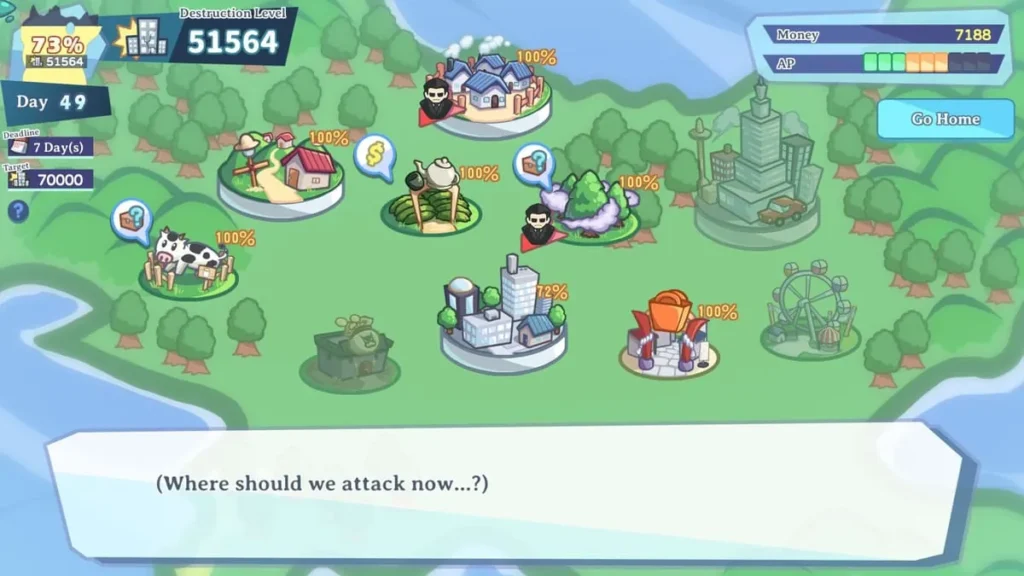
At its core, Kaiju Princess is a game about priorities within a rigid daily structure. Each in-game day is a fresh puzzle where your primary currency isn’t just money—it’s time and energy. Every single action, from making breakfast to leveling a city block, costs a chunk of your daily energy pool. Once it’s gone, the day is effectively over, pushing you to the next. This creates a compelling, sometimes tense, loop where you must choose what matters most today.
Think of it like this: you’re juggling three major pillars that all demand your attention. First, there’s Apartment Maintenance Mechanics. Your home is your base of operations, and letting it fall into disrepair has direct consequences. A dirty environment affects your Kaiju companion’s mood, which in turn impacts everything from conversation outcomes to their performance in… extracurricular activities. Second, there’s the Destruction Quota System. This is your primary job and source of major income and progression. The city expects a certain amount of chaos, and failing to deliver isn’t an option. Third, and most importantly, are the Relationship Dynamics. Every conversation, every gift, every meal shared is an action that builds your bond, unlocks new story beats, and ultimately shapes your journey.
The genius of the Kaiju Princess time management system is that these pillars are interconnected. A happy Kaiju destroys more efficiently, helping your quota. Successfully meeting your quota earns money and items, allowing you to better maintain your apartment and buy gifts. A well-kept home and thoughtful gifts improve moods, making relationship building smoother. It’s a beautiful, delicate cycle. Your job is to find the rhythm. On a typical day, you might allocate energy to: a cleaning task, making a good meal, two conversations, a part-time job for quick cash, and a major destruction event. The order and emphasis shift based on immediate needs and long-term goals.
To visualize the trade-offs, here’s a breakdown of common daily actions:
| Activity | Energy Cost | Primary Reward | Secondary Benefit |
|---|---|---|---|
| Deep Clean Apartment | High | Major Mood Boost | Unlocks special home events |
| Cook a Quality Meal | Medium | Good Mood Boost, Small Health | Can trigger unique dialogues |
| Have a Conversation | Low-Medium | Relationship Points | Potential for money/item gifts |
| Part-Time Job (Office) | Medium | Guaranteed Money | |
| Fulfill Destruction Quota | Very High | Large Money, Story Progress | Chance for rare loot drops |
| Rest/Nap | None (ends day) | Full Energy Reset | Can slightly improve mood if done early in clean space |
Resource Management and Daily Energy
Now, let’s talk about your lifeblood: the daily energy system gameplay. This blue bar is the absolute governor of your day. How to manage energy in Kaiju Princess is the single most important skill you will learn. It’s finite, it’s precious, and wasting it on low-value actions in the early game can leave you stuck in a cycle of failing quotas and grumpy roommates.
The system is elegantly simple: every morning, you start with a full bar. Every action you take depletes a segment. No energy means you must rest. Therefore, resource management simulation here is about energy allocation. You are constantly asking: “What gives me the biggest return on this energy investment right now?”
Early on, your energy pool is small, and everything feels expensive. This is the game’s steepest learning curve. My biggest early mistake was prioritizing “nice-to-haves” over “must-haves.” I’d spend energy on lengthy, exploratory conversations or decorating when I should have been laser-focused on securing my income (the destruction quota) and preventing a mood catastrophe (basic cleaning and food). A negative mood spiral is a huge energy sink, as it makes all other actions less effective.
Pro Tip: Your first priority each day should almost always be ensuring you can meet your destruction quota. That’s your job security. Then, allocate the minimum energy required to keep your companion’s mood from decaying (a quick tidy-up, a simple meal). Any energy left over is your “discretionary budget” for relationship building or extra jobs.
This is where items and money come into play. Money is earned primarily through destruction events and temporary work (like the office job). This cash is your key to easing the daily energy system gameplay. You don’t just buy decorative items; you invest in tools that fundamentally improve your efficiency. Here are some essential game-changers:
- The Premium Vacuum Cleaner: 🏠 This upgrade is a lifesaver. It significantly reduces the energy cost of cleaning tasks. What used to be a “High” cost activity becomes “Medium,” freeing up vital energy for other tasks. It should be your first major purchase.
- High-Quality Kitchenware: 🍳 Similar to the vacuum, better pots and pans reduce the energy cost of cooking. More importantly, they increase the mood and stat benefits from the food you make, giving you more bang for your energy buck.
- Mood-Stabilizing Decor: 🖼️ Items like comfy pillows or posters don’t use energy to “activate.” Once placed, they provide a passive, small mood boost every day, acting as a buffer against decay. This is a long-term investment that pays off daily.
- Convenience Store Snacks: 🍫 While cooking is better, having a stockpile of quick, low-energy snacks is crucial for emergency mood recovery. They’re a tactical tool for when you’ve miscalculated and need a quick fix before an important conversation.
- Stamina Supplements: 💊 These rare consumable items are your “get out of jail free” card. They restore a chunk of energy instantly, allowing you to squeeze one more critical action into a day. Save them for when you’re just short of a quota or a key story event.
Acquiring these isn’t just about shopping; it’s the core loop. You destroy things for money and rare loot, you use that to buy upgrades, and those upgrades let you manage your day better, leading to more efficient destruction and deeper relationships. It’s this satisfying feedback loop that makes the resource management simulation so addictive.
Progression and Difficulty Curve
This brings us to the brilliant Kaiju Princess progression system. One of the most common sentiments I see from new players is, “This is too hard! I can’t do everything!” And that’s absolutely true at the start. The game is intentionally front-loaded with challenge. It wants you to fail, to feel the pressure, and to learn the patterns. The difficulty isn’t static; it’s a curve that you actively flatten through mastery and investment.
The early game is all about survival and comprehension. You’re learning the systems through friction. Which conversations are energy-efficient? How much destruction can my Kaiju really do in one go? How fast does mood decay in a messy room? This phase is tough, but it’s where you build your foundational knowledge. The Kaiju Princess progression system rewards this knowledge more than anything else.
The mid-game is where you start to turn the tide. This is when you’ve purchased key efficiency upgrades like the better vacuum and kitchenware. Your energy pool might have grown slightly through story progression. Most importantly, you’ve internalized the pattern of importance. You have a mental checklist:
1. Secure quota completion.
2. Maintain baseline home/mood stability.
3. Invest in relationship depth.
4. Use leftover resources for optimization (extra jobs, decorating).
This pattern becomes your routine. The “chaos” of the first week crystallizes into a reliable daily strategy. This is when the game opens up. You’re no longer scrambling to survive the day; you’re planning which specific story branch you want to pursue, which gift will trigger a unique scene, or how to optimize your destruction route for a specific material drop. The Kaiju Princess time management shifts from a stressful constraint to an engaging framework for your goals.
By the late game, for a seasoned player, the core daily loop can become almost rhythmic. This is where some players feel a sense of repetition. However, this is also the sign of mastery. You have successfully mastered the resource management simulation to the point where the basic survival mechanics are on autopilot, allowing you to fully focus on the narrative nuances, completionism, or experimenting with different relationship paths. The apartment maintenance mechanics are handled with minimal effort, the destruction quota system is a predictable and powerful income source, and you have a deep understanding of how to manage energy in Kaiju Princess for maximum narrative payoff.
The true progression isn’t just in your bank account or your relationship meter; it’s in your own skill as a player. The game starts challenging and becomes easier not because the numbers change dramatically, but because you have changed. You’ve learned its language. You’ve gone from being a baffled new tenant to the undisputed master of your domain, expertly balancing care, carnage, and connection in one of the most unique simulation experiences out there. Now, with these mechanics under your belt, you’re ready to not just play the game, but to truly master it. 🏆
Kaiju Princess delivers a compelling blend of time management simulation and relationship-building gameplay that appeals to players seeking something beyond traditional management games. The intricate balance between daily resource allocation, character progression, and narrative development creates an engaging experience that rewards strategic planning and thoughtful decision-making. From mastering the energy system to understanding Xao’s complex character dynamics, the game offers depth that extends beyond its initial premise. Whether you’re drawn to the simulation mechanics, the unique storytelling approach, or the combination of both, Kaiju Princess presents a distinctive gaming experience that stands out in its genre. For players interested in exploring this title, understanding these core elements will enhance your enjoyment and help you make the most of your time in this intriguing world.